达州驾考英文版科目四
1、What should a motor vehicle driver do to ensure safety when experiencing a breakdown at night?
A. Park in a safe place
B. Turn on hazard lamp
C. Turn on clearance lamp and tail lamp
D. Set up a warning sign in accordance with regulation
Answer:ABCD
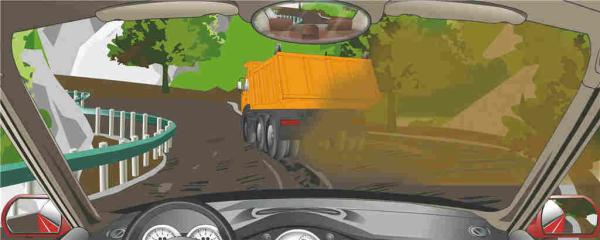
2、When encountering this situation on a mountainous road, motor vehicle drivers should overtake the vehicle in front by speeding up.
A. Right
B. Wrong
Answer:B
3、When passing a sharp curve, motor vehicle drivers may overtake if there are few other vehicles on the road.
A. Right
B. Wrong
Answer:B
4、What should motor vehicle drivers do under the circumstance shown in the flash?
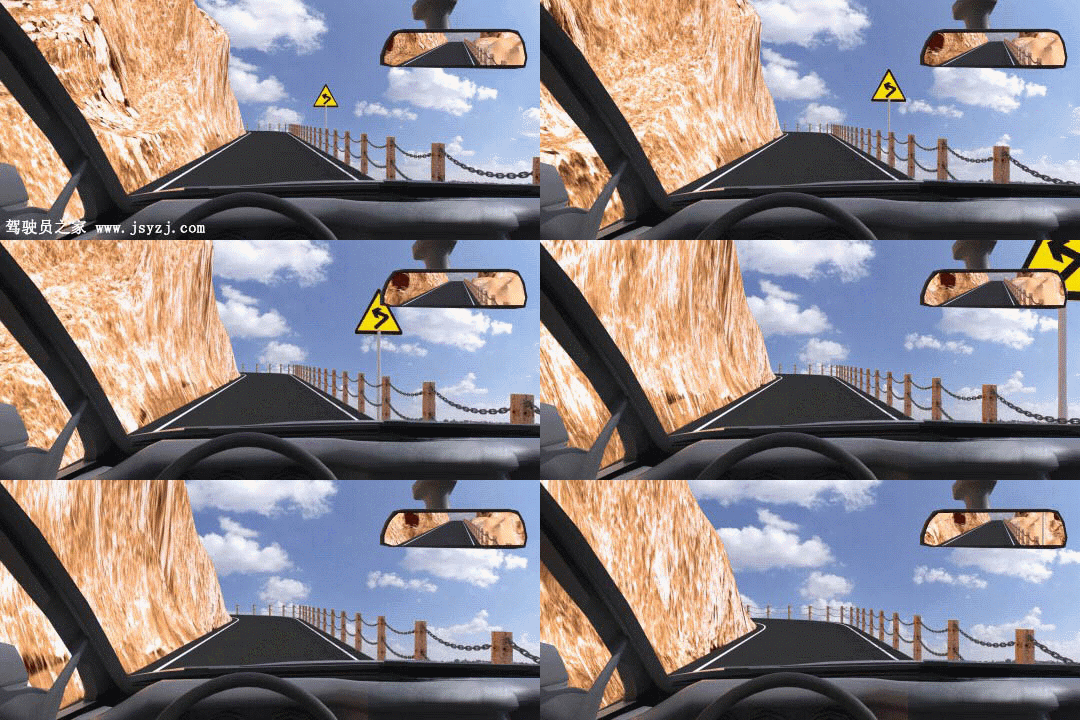
A. Drive by borrowing the opposite lane
B. Brake suddenly and pass through at a lower speed
C. Drive by the outer side of the curve
D. Reduce speed fully and drive by the right side
Answer:D
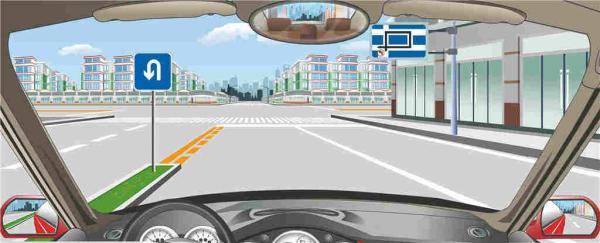
5、The sign on the right indicates a left-turn bypass route at the intersection ahead.
A. Right
B. Wrong
Answer:A
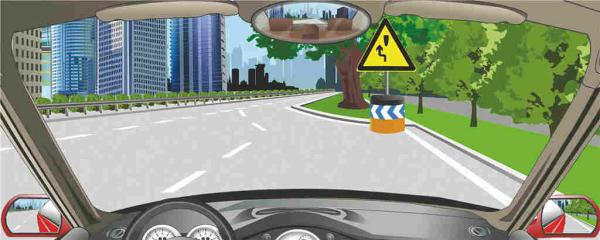
6、This sign warns to bypass from the right side to avoid the roadblock.
A. Right
B. Wrong
Answer:B
7、The sign on the right indicates right-hand turn only.
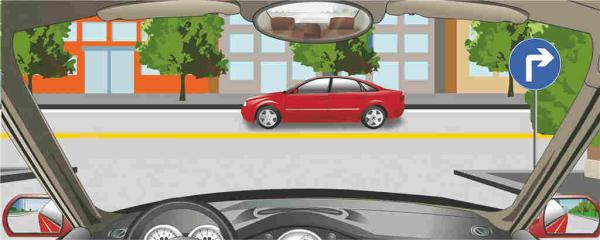
A. Right
B. Wrong
Answer:A
8、Upon encountering this traffic signal, how should a driver react?
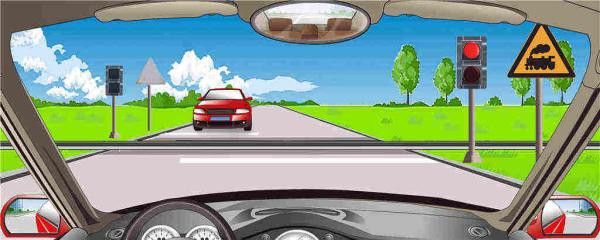
A. Observe the traffic situation and pass at a reduced speed
B. Pass at an increased speed without changing gears
C. Pass before the train comes
D. Crossing the stop line is prohibited
Answer:D
9、When braking, the steering will become impossible if the front wheels are blocked
A. Right
B. Wrong
Answer:A
10、Motor vehicles are not allowed to reverse in a tunnel.
A. Right
B. Wrong
Answer:A
11、When a tire suddenly bursts on the road, the driver should violently depress the brake pedal to reduce speed and stop the vehicle.
A. Right
B. Wrong
Answer:B
12、The sign on the right indicates a one-kilometer distance from ETC toll station ahead.
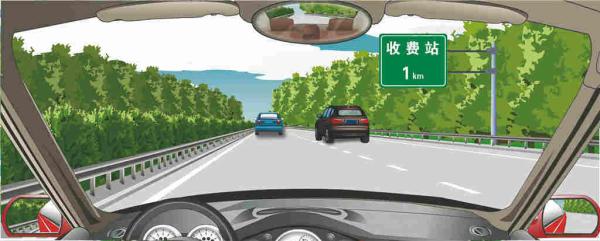
A. Right
B. Wrong
Answer:B
13、When a bus encounters an unexpected situation or an accident, the driver should do his best to minimize the loss and should never cause a secondary accident or even greater loss for the sake of avoiding danger.
A. Right
B. Wrong
Answer:A
14、Which is the correct way to use a fire extinguisher?
A. Stand on the leeward side
B. Direct the fire extinguisher at the source of fire
C. Try to approach the source of fire as close as possible
D. Direct the fire extinguisher at the flames
Answer:B
15、Which is the wrong measure to avoid tire burst?
A. Reduce tire pressure
B. Check tires regularly
C. Remove foreign matters from the tire tread grooves timely
D. Replace tires that have cracks or deep cuts
Answer:A
16、Under such circumstances, what should be done by the motor vehicle driver?

A. Overtaking the vehicle in front on its left
B. Overtaking by occupying the opposite lane
C. Overtaking the vehicle in front on its right
D. Following the vehicle in front
Answer:D
17、When encountering an emergency on a highway, the driver should not drastically turn to evade.
A. Right
B. Wrong
Answer:A
18、The sign on the right indicates an ETC lane at toll station ahead.
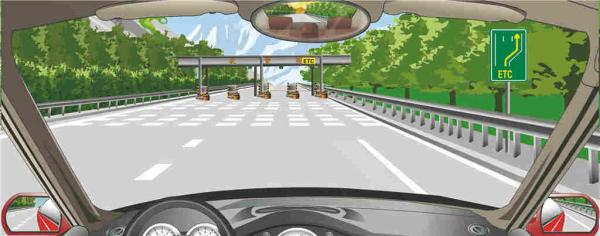
A. Right
B. Wrong
Answer:A
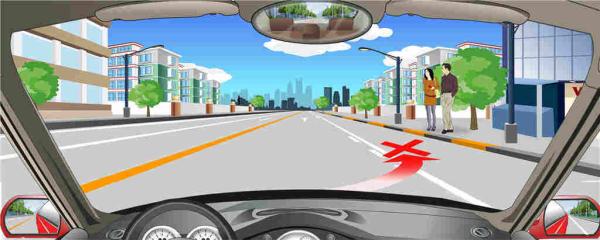
19、The yellow broken line on the curb indicates that vehicles are not allowed to stop and let passengers embark or disembark or load and unload freight at the roadside.
A. Right
B. Wrong
Answer:B
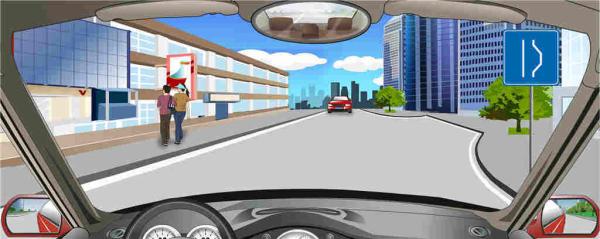
20、The sign on the right indicates a passing bay ahead.
A. Right
B. Wrong
Answer:A