迪庆英文驾考科目四考试题库
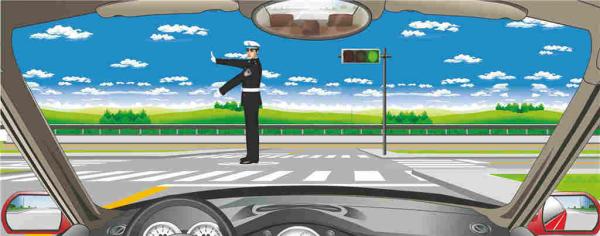
1、Drivers may turn left when seeing these hand signals.
A. Right
B. Wrong
Answer:A
2、It is not a bad habit for a driver to frequently change lanes.
A. Right
B. Wrong
Answer:B
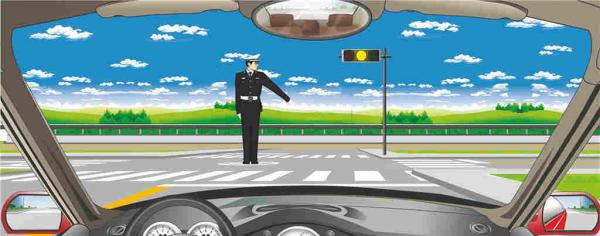
3、Drivers may turn left when traffic police give these hand signals.
A. Right
B. Wrong
Answer:B
4、The sign on the left indicates no U-turn at the intersection ahead.

A. Right
B. Wrong
Answer:A
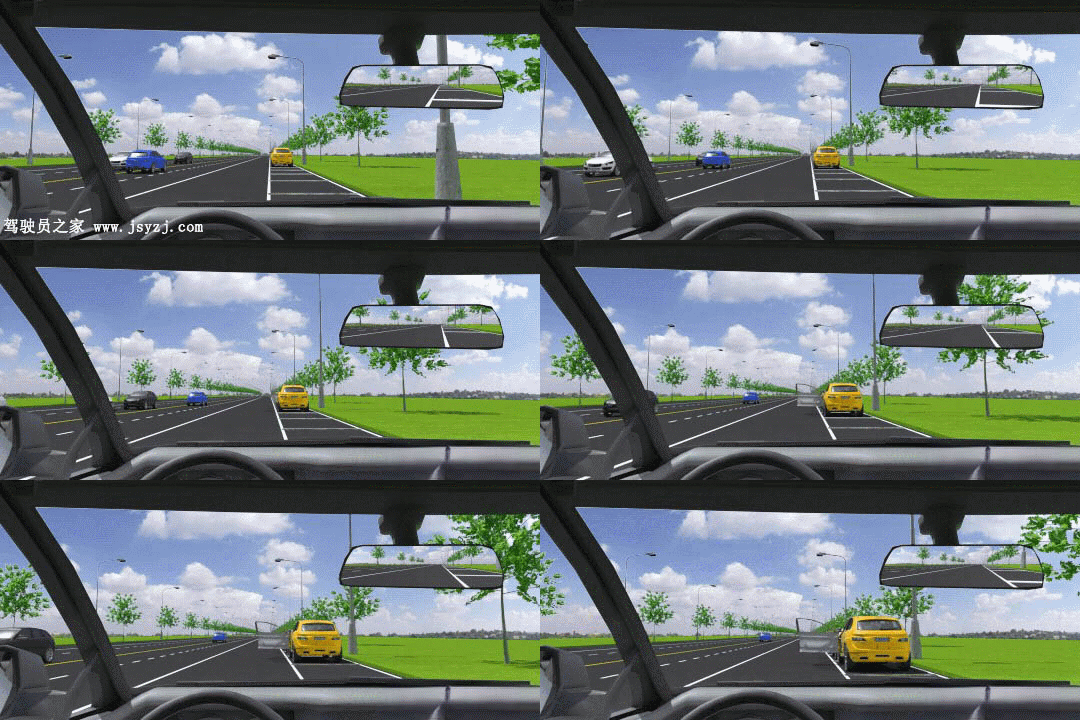
5、As shown in the flash, what should the motor vehicle driver do when encountering this situation?
A. Reserve a safe crosswise distance and cut speed
B. Keep a normal speed
C. Use the emergency brake when approaching
D. Speed up and pass rapidly
Answer:A
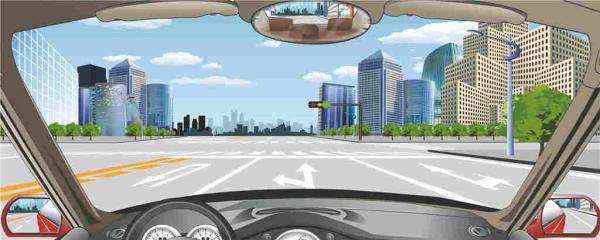
6、Before making a U-turn at the intersection ahead, motor vehicle drivers should drive to the lane for turning left and going straight.
A. Right
B. Wrong
Answer:B
7、When a wounded person suffering burns is thirsty he may drink a small quantity of lightly salty water.
A. Right
B. Wrong
Answer:A
8、The driver should turn on the left-turn indicator after entering the acceleration lane on an expressway.
A. Right
B. Wrong
Answer:B
9、When there is a sudden braking failure on a downhill road, in which ones of the following ways can drivers reduce speed?
A. Driving onto the emergency lane and reduce speed and stop there
B. Rubbing the vehicle body against the rocks or trees on roadside
C. Pulling up the handbrake first
D. Immediately changing to a low gear
Answer:ABD
10、The guide arrow on the road surface of this lane indicates that U-turns and left turns are permitted at the intersection ahead.

A. Right
B. Wrong
Answer:A
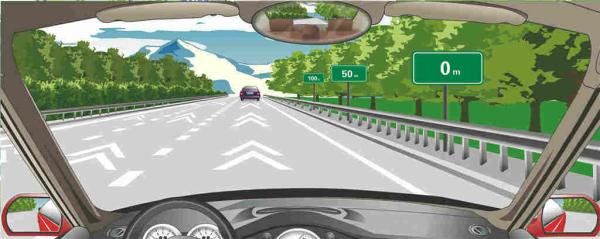
11、The white zig-zag line on the highway serves as a reference for the speed of a driver.
A. Right
B. Wrong
Answer:B
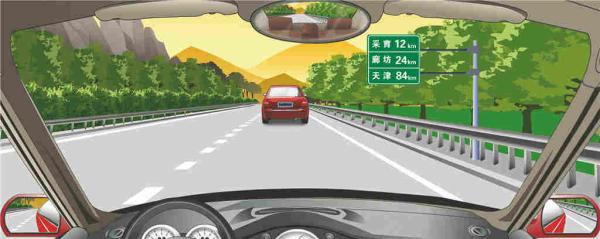
12、The sign in front indicates the distance to highway destination.
A. Right
B. Wrong
Answer:B
13、What should the driver do to follow other motor vehicles on a mountain road?
A. Closely follow the vehicle in front
B. Increase the safety distance
C. Reduce the vertical distance between vehicles
D. Try to overtake the vehicle in front as soon as possible
Answer:B
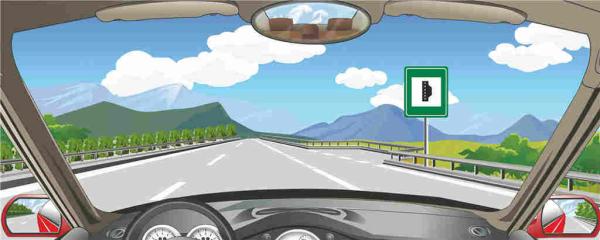
14、The sign in front indicates a temporary parking lot on the right side of the highway.
A. Right
B. Wrong
Answer:B
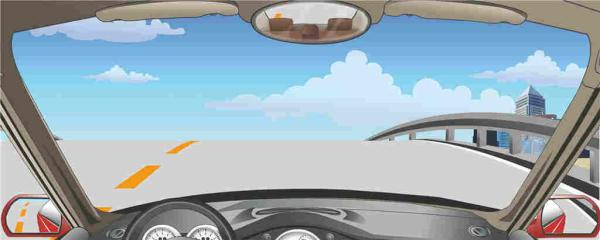
15、Motor vehicle drivers should rush to the top of the slope in this situation.
A. Right
B. Wrong
Answer:B
16、The sign on the right warns of a guarded railway intersection ahead.
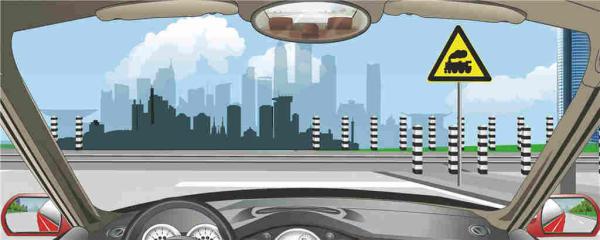
A. Right
B. Wrong
Answer:B
17、What should be done by drivers in order to safely pass through the curve in this condition?

A. Reduce speed and drive on the right side
B. Drive on the central line of the road
C. Drive on the outer side of the curve
D. Drive by borrowing the opposite lane
Answer:A
18、The sign in front indicates the name and number of the highway.
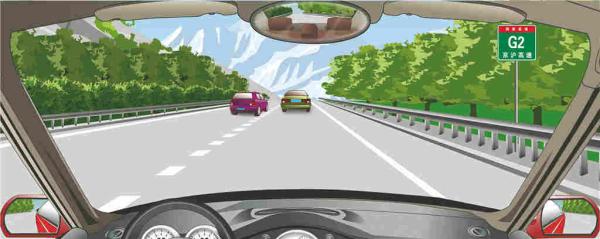
A. Right
B. Wrong
Answer:A
19、Mr. Yang drove an adapted minibus (capacity 9 people and carrying 64 passengers, including 62 kindergarten pupils). When driving in Ma Caogou Village of Yu Linzi County, the bus used the lane for oncoming traffic and had a head-on colision with a heavy dump truck. As a result of this accident, 22 people were killed and 44 injured. What are the main illegal acts in this case?
A. The truck exceeded the speed limit
B. Illegal adaptation of a motor vehicle
C. The minibus carried more passengers than capacity
D. Driving in the opposite direction lane
Answer:BCD
20、What is the function of ABS during emergency braking?
A. Shortening the braking distance
B. Keeping steering capacity of the motor vehicle
C. Relief the braking inertia
D. Controlling directions automatically
Answer:B