贵港驾考科目四英文版题库
1、The sign on the right warns of a danger from rockfall on the left side.
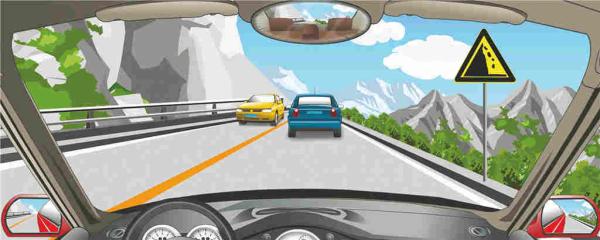
A. Right
B. Wrong
Answer:A
2、When a motor vehicle turns at an excessively high speed, it can easily slide sideways.
A. Right
B. Wrong
Answer:A
3、Under such circumstances, motor vehicle drivers should reduce speed by the right side swiftly and yield.
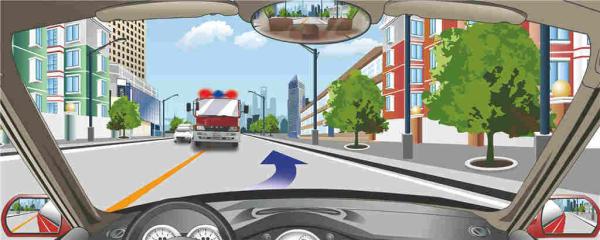
A. Right
B. Wrong
Answer:A
4、When driving in a strong wind, drivers should abruptly turn the steering wheel to return to the original direction if they feel the vehicle deviates horizontally due to a strong gale.
A. Right
B. Wrong
Answer:B
5、The sign in front is an advance announcement of famous places and distances en route.
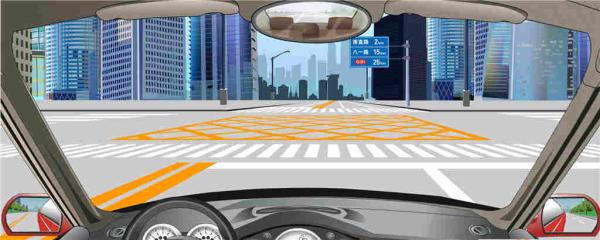
A. Right
B. Wrong
Answer:A
6、The sign on the right warns of a one-way tunnel ahead.
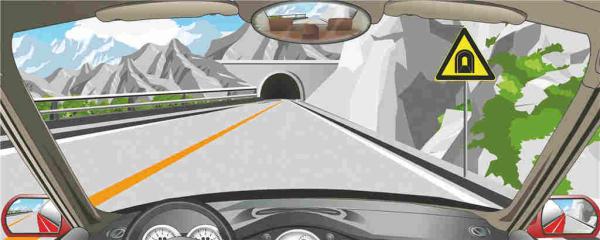
A. Right
B. Wrong
Answer:B
7、When driving on a muddy road, what should the driver do?
A. Try to avoid using the foot brake
B. Drive slowly in mid or low gear
C. Firmly hold the steering wheel
D. Speed up and pass through
Answer:ABC
8、Having driven a large passenger vehicle (carrying 44 passengers, permitted carrying capacity 44) equipped with sleepers at 44km/hour on a frozen road, at 58 km mark by 500m on 540 County Road in Yanhe County, Mr. Luo sideslipped and left the road, killing 15 people and injuring 27. Which of the following law-breaking acts did Mr. Luo commit?
A. Exceeding the carrying capacity of the passenger vehicle
B. Speeding
C. Fatigued driving
D. Improper driving
Answer:B
9、What should the driver do when seeing these hand signals?
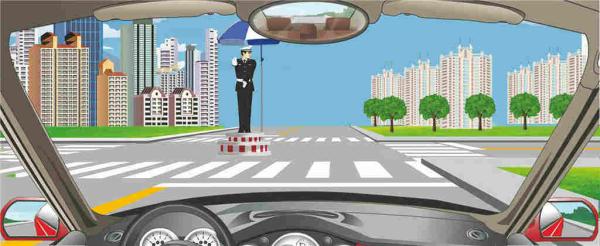
A. Go straight and pass through the intersection
B. Stop and wait
C. Turn right at the intersection
D. Turn left at the intersection
Answer:B
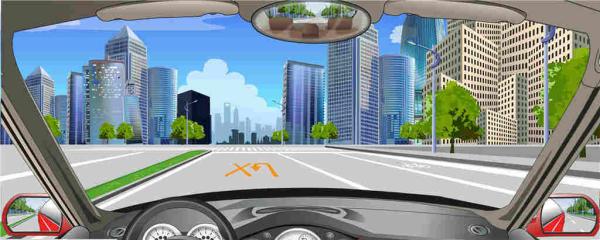
10、The road marker indicates that vehicles are not allowed to make a U-turn at the intersection ahead.
A. Right
B. Wrong
Answer:A
11、What should the driver do if the back wheel slides to the right on a muddy road?
A. Continuously speed up
B. Turn right
C. Turn left
D. Apply emergency brake
Answer:B
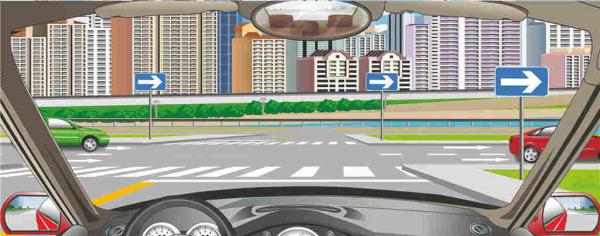
12、The sign in front indicates a one-way lane after turning right.
A. Right
B. Wrong
Answer:A
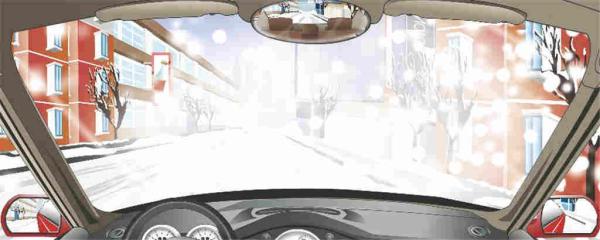
13、In the condition of low visibility, drivers should turn on the low-beam when setting off
A. Right
B. Wrong
Answer:A
14、When driving on a long downhill road, which is the best way to control the speed?
A. Coast in neutral gear
B. Take a low gear
C. Depress the clutch
D. Pull up the handbrake
Answer:B
15、When a wounded person suffering burns is thirsty, he should only drink plain boiled water.
A. Right
B. Wrong
Answer:B
16、How to reduce speed or stop when driving on a road covered with snow and ice?
A. Take full advantage of driving brake
B. Take full advantage of the control power from engine
C. Take full advantage of parking brake
D. Take full advantage of speed retarder
Answer:B
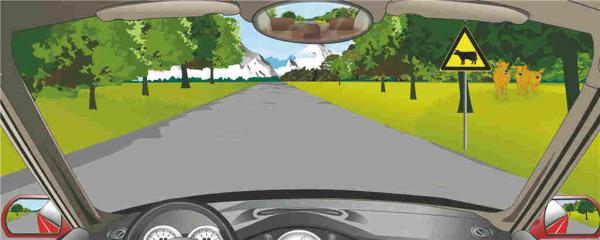
17、The sign on the right warns of a wildlife protection area ahead.
A. Right
B. Wrong
Answer:B
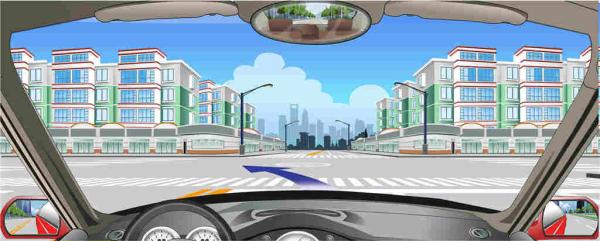
18、The circle in the center of the intersection indicates that drivers should drive along the inner side when making a small left turn.
A. Right
B. Wrong
Answer:A
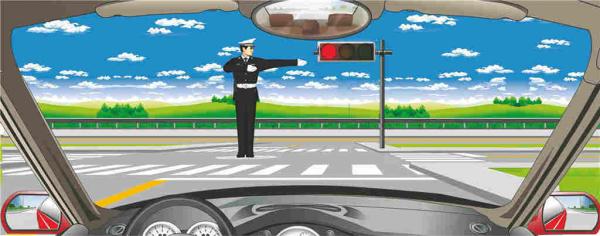
19、Those traffic police signals mean turning right.
A. Right
B. Wrong
Answer:B
20、When parking temporarily in this situation, motor vehicle drivers are allowed to turn the steering wheel left to avoid sliding.

A. Right
B. Wrong
Answer:A