济宁摩托车科目四考试英文
1、The wrong measure to use the brake of a motorcycle is to __________.
A. Simultaneously use the front and back brakes
B. Use the front brake first
C. Use the back brake first
D. Avoid using the front brake too early
Answer:B
2、When finding a tire burst on the road, the driver should gently depress the brake pedal, reduce speed and stop the vehicle slowly.
A. Right
B. Wrong
Answer:A
3、What should the motor vehicle driver do when the motor vehicle encounters the crosswalk in thissituation?
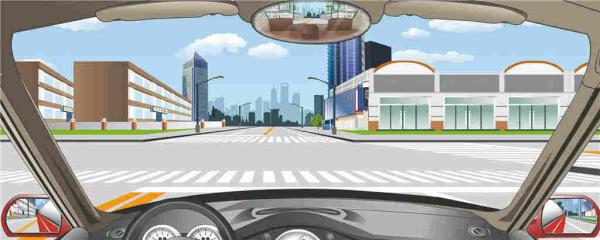
A. Slow down and pass
B. Speed up and pass
C. Sound the horn and pass
D. Stop immediately
Answer:A
4、When driving on a muddy roads, it is easy for wheels to sideslip or skid, which leads to traffic accidents.
A. Right
B. Wrong
Answer:A
5、When such circumstances happen suddenly, drivers should reduce speed in a timely fashion or stop to yield.
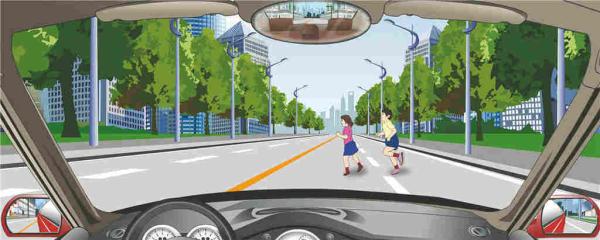
A. Right
B. Wrong
Answer:A
6、When a motor vehicle temporarily stops in fog, which lamp should be turned on?
A. Hazard lamp, clearance lamp and rear position lamp
B. Left-turn indicator, clearance lamp and rear position amp
C. Headlamp, clearance lamp and rear position lamp
D. Reverse lamp, clearance lamp and rear position lamp
Answer:A
7、When rescuing the injured, it is necessary to ________.
A. Save life first and treat the wounds later
B. Treat the wounds first and safe life later
C. Help the slightly wounded persons first
D. Help the seriously wounded persons later
Answer:A
8、Driving a motor vehicle in the downhill section of a mountain road avoids overtaking as much as possible because _______.
A. Vehicle resistance in downhill section is very high
B. Vehicles on downhill sections are more difficult to control than on flat roads due to gravity.
C. In downhill section, the front speed is faster and it is difficult to overtake.
D. Vehicles on downhill sections tend to be too fast due to gravity
Answer:BD
9、What is the meaning of this sign?

A. No changing lane
B. No left turn
C. No going straight
D. No U turn
Answer:D
10、What is the meaning of this sign?
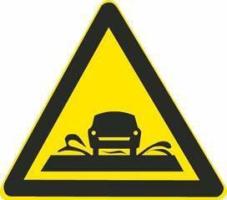
A. Muddy road
B. Low-lying road
C. Overflowing road
D. Ferry
Answer:C
11、What is the meaning of this sign?
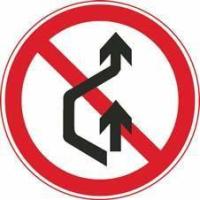
A. No borrowing lane
B. No changing lane
C. No overtaking
D. No U turn
Answer:C
12、When a wounded person suffering burns is thirsty, he should only drink plain boiled water.
A. Right
B. Wrong
Answer:B
13、What is the meaning of this sign?
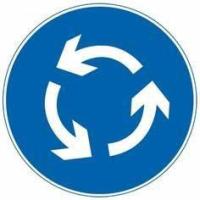
A. Passing by the right side
B. Passing by the left side
C. Running to right side
D. Running the roundabout
Answer:D
14、When evading an emergency, except for being calm what principle should be held by drivers?
A. Evading people first and then objects
B. Evading objects first and then vehicles
C. Evading vehicles first and then people
D. Evading objects first and then people
Answer:A
15、The continuously flashing yellow light is to warn that the driver should look and make sure it is safe to pass.
A. Right
B. Wrong
Answer:A
16、When approaching a vehicle on a narrow slope, which one of the following ways is correct?
A. The descending vehicle yields to the ascending
B. The vehicle which is further from the slope crest should yield
C. The ascending vehicle yields to the descending
D. If the descending vehicle has reached the midpoint while the ascending vehicle has not yet set out, the descending vehicle must yield.
Answer:A
17、It is not a bad habit for a driver to frequently change lanes.
A. Right
B. Wrong
Answer:B
18、Before driving, it is necessary to check whether the cooling liquid, engine oil and fuel oil, are leaking.
A. Right
B. Wrong
Answer:A
19、When the driver discovers a tire is leaking and steers the vehicle off the main carriageway, he should refrain from applying emergency so as to avoid a vehicle turnover or a rear-end collision arising from the late braking of the following vehicle.
A. Right
B. Wrong
Answer:A
20、What is the meaning of this sign?
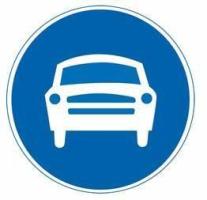
A. No passing for small vehicle
B. Passing for small vehicle only
C. Passing for motorized vehicle
D. No passing for small vehicle
Answer:C