保定英文科目四试题答案
1、As shown in the flash, the actions of the driver are correct.
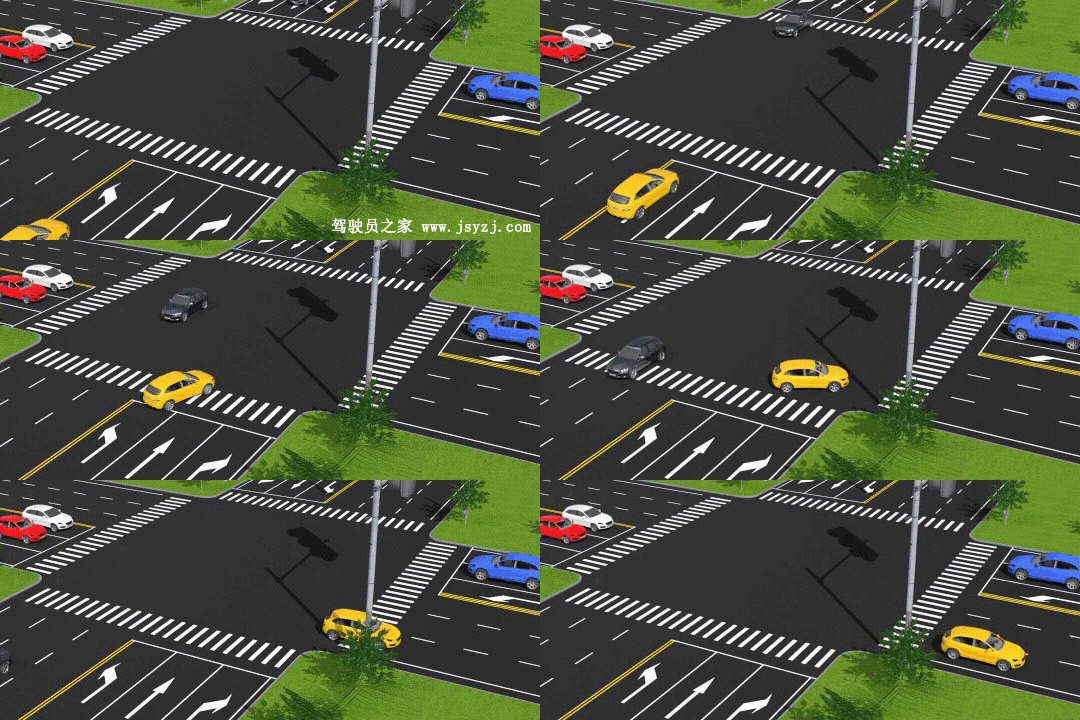
A. Right
B. Wrong
Answer:B
2、Motor vehicles are prohibited from turning left in this situation.
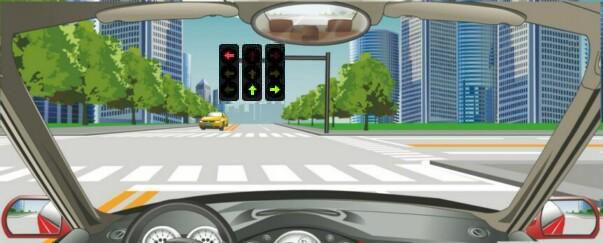
A. Right
B. Wrong
Answer:A
3、How should the driver pass this place safely?
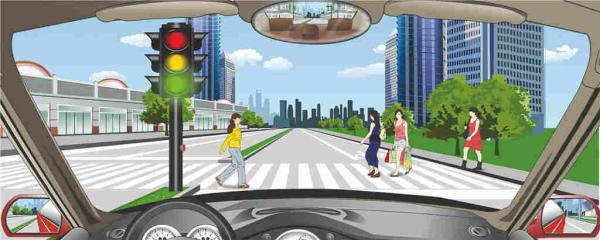
A. Speed up and pass in the front of the pedestrians
B. Bypass behind the pedestrians
C. Slow down and sound the horn
D. Stop and wait until the pedestrians pass
Answer:D
4、How many kinds of law-breaking acts are displayed in flash 7?
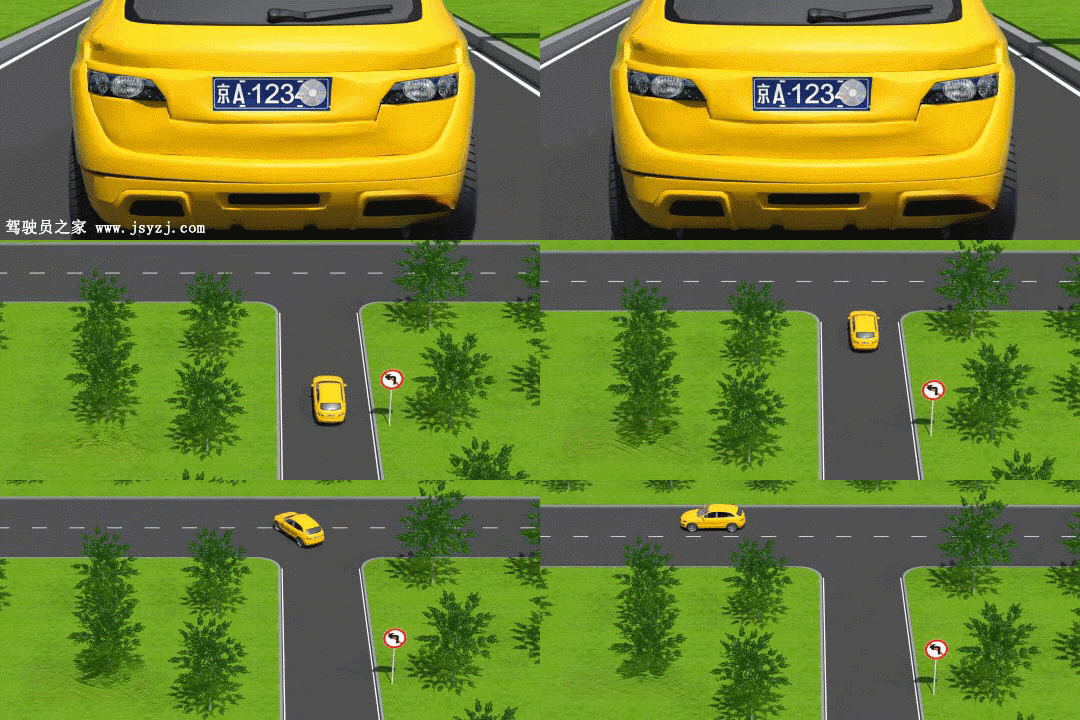
A. One
B. Two
C. Three
D. Four
Answer:B
5、The sign on the right warns of a ferry crossing 100 meters after turning right at the intersection ahead.

A. Right
B. Wrong
Answer:A
6、Under such circumstance at an intersection. motor vehicle drivers should be prepared to stop and yield at any time.
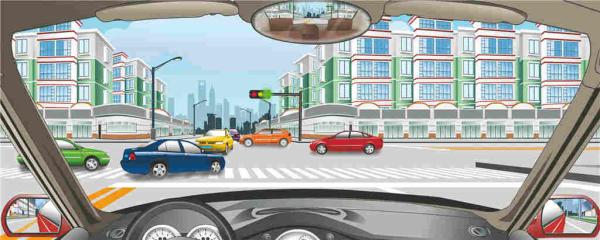
A. Right
B. Wrong
Answer:A
7、When an erosive material catches fire, it should not be put out with water cannon.
A. Right
B. Wrong
Answer:A
8、When encountering a road like this, motor vehicle drivers may make good use of neutral gear to coast.
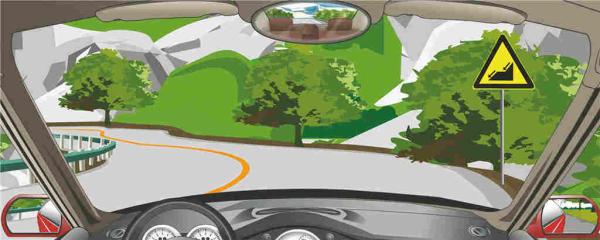
A. Right
B. Wrong
Answer:B
9、Drivers should drive at a lower speed when traffic police give these hand signals.
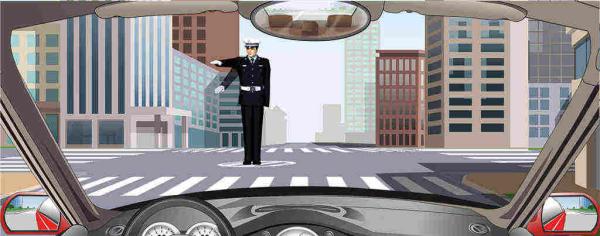
A. Right
B. Wrong
Answer:A
10、At this moment, the driver may speed up and pass the intersection rapidly.

A. Right
B. Wrong
Answer:B
11、The sign on the right indicates left turn only at the intersection ahead.
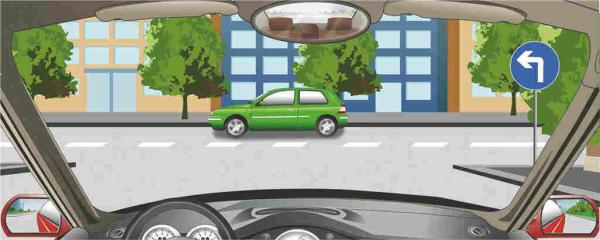
A. Right
B. Wrong
Answer:A
12、Mr. Tong drove a large bus (capacity 55 people and carrying 54) to Taiyuan City. When he drove on a muddy road at the speed of 45 kilometers per hour, the bus skidded into a deep ditch, killing 14 people dead and badly injuring 40 What is the main illegal act committed by Mr. Tong?
A. Overloaded
B. Speeding
C. Driving after drinking
D. Fatigued driving
Answer:B
13、What should the driver pay attention to when the motor vehicle on the main road approaches a junction with a feeder road?
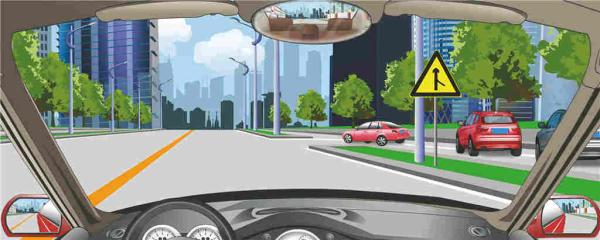
A. Slow down in advance and pay attention to other motor vehicles
B. Maintain the normal speed
C. Sound the horn and pass rapidly
D. Speed up and pass rapidly
Answer:A
14、This sign warns that the section ahead is under traffic monitoring.
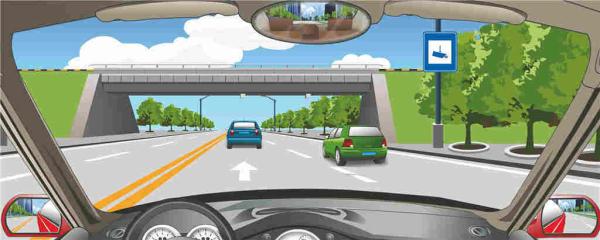
A. Right
B. Wrong
Answer:A
15、When two vehicles approach each other on a foggy day, what is the best method of safe driving?
A. Turn on the high-beam
B. Slowdown and maintain a large safety distance
C. Turn on the low-beam
D. Turn on the fog lamp
Answer:B
16、What should be done by drivers in order to drive safely on the road in this condition?
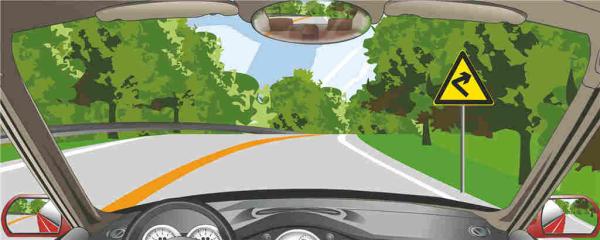
A. Make a large turn on the left side of the road
B. Make a turn on the central line of the curve
C. Make a small turn on the right side of the road
D. Make a turn by borrowing the opposite lane
Answer:C
17、Drivers may turn left when seeing these hand signals.
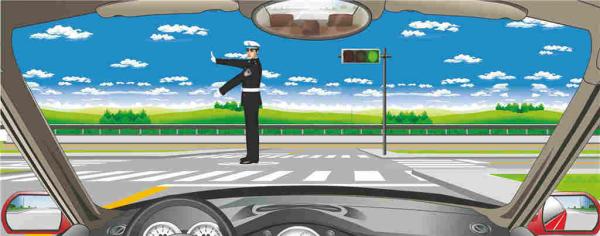
A. Right
B. Wrong
Answer:A
18、The sign on the right warns of a sharp winding road ahead.
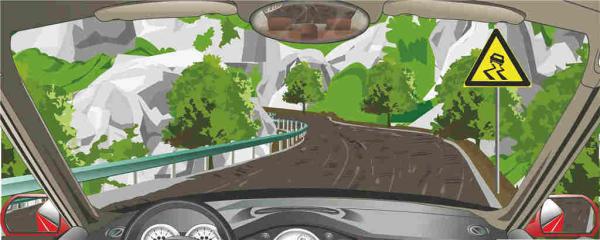
A. Right
B. Wrong
Answer:B
19、The sign in front indicates a one-kilometer distance from the highway entry.

A. Right
B. Wrong
Answer:A
20、When a motor vehicle enters an expressway from the ramp, which of the following lamps should be turned on?
A. The left-turn indicator
B. The right-turn indicator
C. The hazard warning lamp
D. The headlamp
Answer:A